Editorial scene photography; images illustrate the setting and are not evidence of product testing.
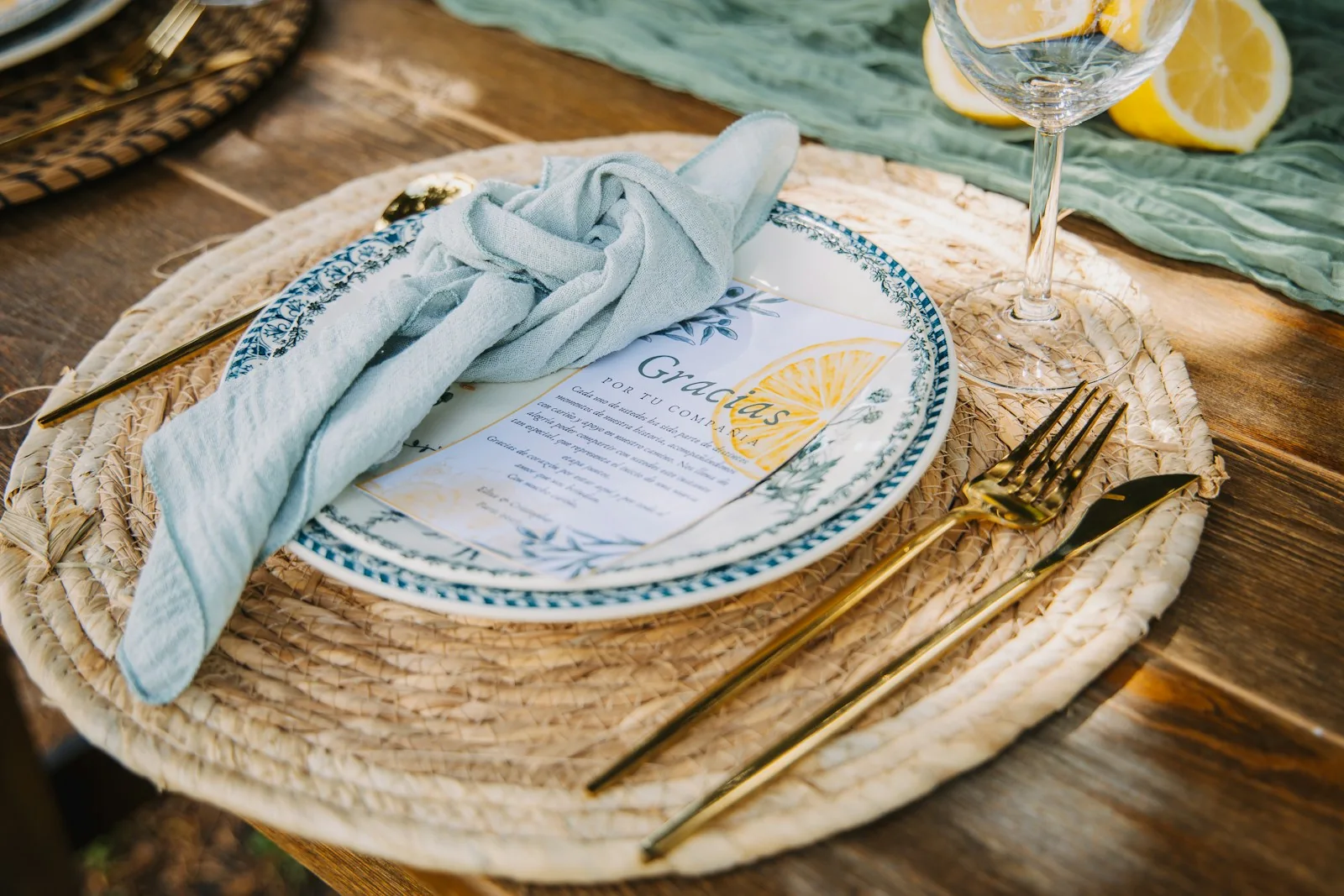
An ordinary Friday dinner deserves a table people can relax around. That means room for a plate and glass, easy conversation across the middle, and a place for the serving dish when it arrives hot from the kitchen. Decorative decisions can follow those practical ones. Use the tableware you have, connect it with a simple repeated detail, and leave enough space for the meal. A welcoming setting should become more comfortable as people settle in, rather than requiring everything to remain perfectly arranged.
Plan the table around the meal
A shared meal needs room for the actual food. Set out the serving dishes before deciding how much decoration fits. If the table is small, use a nearby surface for water or extra plates. Guests should be able to put down a glass without negotiating a forest of objects. An inviting table begins with generous practical space, even when the room itself is compact.
Mix what already works
Plates do not need to match perfectly to feel coherent. Repeated color, similar scale, or the same napkin fold can connect a mixed collection. Check that cutlery and glasses are comfortable to use, then stop rearranging. If something is missing, buy the simplest piece that fills that role. A dinner for friends is a poor reason to acquire a whole set that has nowhere to live after the evening ends.
Think beyond the first look
Choose a centerpiece low enough for conversation across the table. If you use candles, follow the product’s safety directions and keep flame away from loose fabric or anything that could be knocked over. Unscented options avoid competing with the meal. Leave a place for used serving utensils and a clear route between kitchen and table. The details people appreciate often become visible only once everyone has started eating.
Shop for the missing place setting
Set the table for the actual guest count before deciding what to buy. Include serving bowls, utensils, water, and the dishes the meal needs. If a gap remains, identify its exact purpose: a usable glass, a serving spoon, or a napkin. Check dimensions and cleaning guidance on the proposed item, especially when storage is limited. Prefer something useful for weekday meals too. Flowers or candles should fit the space left after the practical pieces, not dictate it. Avoid a purchase that makes dinner feel more elaborate while making it harder to pass food or see the person opposite you.
Your shopping checklist
- Give existing plates, comfortable glasses, and a few napkins a clear role before adding a low centerpiece that leaves sightlines open.
- Compare the published measurements with the space, clothing, or bag you already use.
- Read materials, care guidance, and the current return policy on the exact listing.
- Keep the receipt and follow the seller’s conditions while deciding whether the purchase works.
For a starting point, browse MUJI and compare the current selection against your own checklist. This is a place to research options, not an endorsement of every item or a statement that a particular product has been tested. Availability, prices, and policies can change; confirm the details directly before ordering.
Questions before you decide
Do I need cloth napkins?
Use them if you enjoy them and have a workable laundry routine. They are one optional detail, not a condition of a welcoming dinner. Choose a size and fabric you are comfortable using rather than preserving a delicate set for an imaginary perfect occasion.
What if my plates do not match?
Repeat another element, such as a color or the way places are arranged, and make sure each setting is practical. A mixed table can feel deliberate without replacing the collection. Similar plate sizes may matter more for serving the same meal comfortably.
Where should the serving dishes go?
Test their footprints on the table before guests arrive. If there is little space, use a nearby stable surface and keep the route clear. Make it easy to pass food and put down utensils; those details matter once the meal is underway.